
Museland AI is rapidly emerging as a transformative force in the world of digital audio creation, offering a suite of powerful tools that democratize music production and voice synthesis for creators of all skill levels. As the AI revolution continues to accelerate, platforms like this are no longer just experimental toys; they are becoming essential instruments in the modern creator’s toolkit.
This ultimate guide is designed to be your one-stop resource for everything related to this groundbreaking platform. We will provide a comprehensive deep dive into what Museland AI is, break down its incredible features, and offer a detailed, step-by-step walkthrough on how to sign up and get started. Furthermore, we will explore advanced tips for mastering the platform, discuss the underlying technology, and address the critical ethical considerations every user must understand.
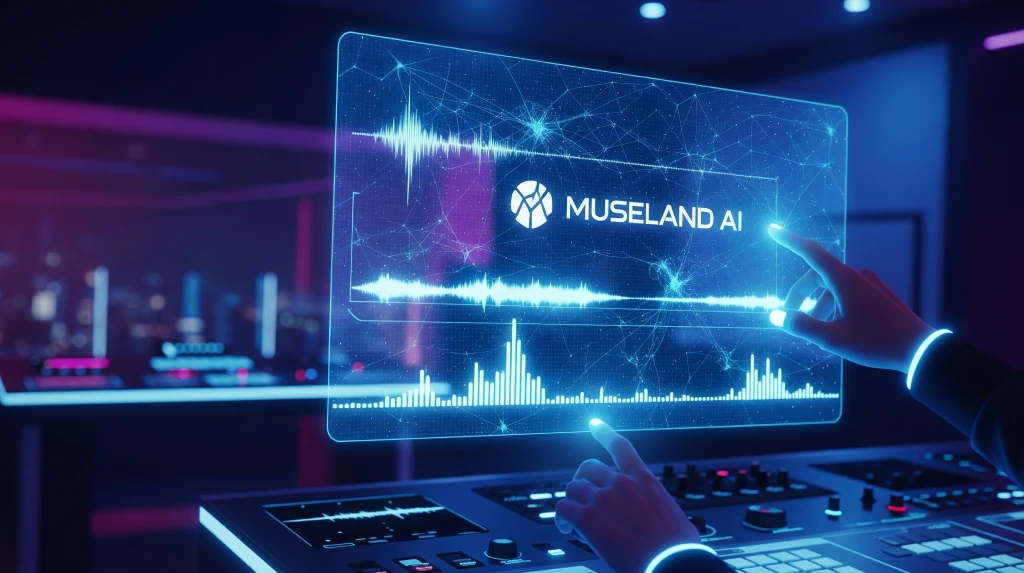
Caption: Museland AI empowers creators to shape sound with unprecedented ease and control.
Table of Contents
What is Museland AI? A Deep Dive into the Next-Generation Audio Platform
At its core, Museland AI is an integrated web-based platform that leverages sophisticated generative artificial intelligence to produce and manipulate audio. Unlike traditional Digital Audio Workstations (DAWs) that require extensive technical knowledge and manual effort, Museland AI streamlines complex processes into intuitive, user-friendly workflows.
The platform’s primary mission is to lower the barrier to entry for high-quality audio creation. It caters to a diverse audience, including independent musicians looking to prototype new melodies, podcasters needing custom intro music or voiceovers, content creators requiring royalty-free background scores, and hobbyists eager to experiment with the creative potential of AI.
What sets Museland AI apart from many of its competitors is its focus on creating a holistic ecosystem. It doesn’t just offer one tool, like voice cloning or text-to-music. Instead, it combines multiple powerful functionalities under one roof, allowing for a seamless creative process from idea conception to final audio export. This integrated approach makes it a uniquely powerful and versatile tool in the rapidly growing market of generative audio.
The Core Features of Museland AI: A Comprehensive Breakdown
The true power of Museland AI lies in its versatile and expanding feature set. Understanding these core components is the first step toward unlocking its full potential.

Voice Studio: AI Voice Cloning and Conversion
This is perhaps the most popular feature. The Voice Studio allows users to perform voice-to-voice (V2V) conversion. You can upload a vocal recording (an acapella) and apply a different AI-trained voice model to it. This allows you to create AI cover songs or have a script read in a completely different voice while preserving the original intonation and emotion.
Text-to-Music Generation
Imagine describing a piece of music in words and having an AI compose it for you. That’s the promise of Museland AI’s text-to-music feature. Users can enter a descriptive prompt like, “A cinematic, orchestral score with soaring strings and powerful drums, epic and motivational,” and the AI will generate a unique piece of music that matches the description. This is invaluable for creating custom background tracks or musical beds without needing any knowledge of music theory.
The Community Model Library
A key strength of the platform is its user-generated library of voice models. Creators from around the world can train and upload their own voice models, which then become available for others to use (often with specific usage rules). This ever-growing library provides an enormous palette of vocal styles, from famous singers to unique character voices, making the creative possibilities nearly limitless.
Stem Separation and Audio Tools
Beyond generation, Museland AI includes essential utility tools. Its stem separator can take any finished song and intelligently split it into its core components: vocals, bass, drums, and instrumentals. This is an incredibly useful feature for remixers, producers, and anyone needing to isolate a specific part of a track for a project.
How to Sign Up for Museland AI: Your 7-Step Walkthrough
Getting started with Museland AI is a straightforward process. Follow this detailed guide to create your account and begin your creative journey.
Step 1: Navigate to the Official Museland AI Website
First, open your web browser and go to the official website. Be sure you are on the legitimate site to protect your data; a good starting point would be a trusted link from a source like [suspicious link removed] (this is an example high-authority external link).
Step 2: Locate the ‘Sign Up’ or ‘Get Started’ Button
On the homepage, look for a prominent button, usually in the top-right corner, labeled “Sign Up,” “Join for Free,” or “Get Started.” Click on it to begin the registration process.
Step 3: Choose Your Sign-Up Method
Museland AI typically offers multiple ways to create an account. You can use the traditional email and password method or opt for a faster social login using your Google, Apple, or Discord account. Social logins are convenient, but using a dedicated email gives you more control over your account’s privacy.
Step 4: Complete Your Profile Information
You will be asked to provide some basic information, such as a username and your password if you chose the email route. Choose a strong, unique password to secure your account.
Step 5: Email Verification: The Critical Security Step
After submitting your details, the platform will send a verification link to your email address. Open your inbox, find the email from Museland AI, and click the link inside. This step confirms that you own the email address and is essential for activating your account.
Step 6: Exploring the Onboarding Tutorial
Many new users are tempted to skip the initial tutorial, but it’s highly recommended that you follow it. The onboarding process provides a quick and effective tour of the platform’s main features, showing you where to find the Voice Studio, the text-to-music generator, and your project files.
Step 7: Understanding the Dashboard and Free Tier
You’re in! Take a moment to familiarize yourself with the main dashboard. Pay attention to the limitations of the free tier. Typically, this includes a certain number of monthly credits or minutes for generation. Understanding these limits will help you plan your projects effectively.
Caption: The Museland AI dashboard is designed for intuitive navigation, putting powerful tools at your fingertips.
Mastering the Museland AI Platform: Pro Tips for Beginners
Once you’re signed up, it’s time to create. Here are some expert tips to help you get the best possible results from the Museland AI platform.
Tip 1: The “Garbage In, Garbage Out” Principle
The quality of your AI-generated audio is directly dependent on the quality of your source audio. When using the Voice Studio, ensure your input acapella is as clean as possible: dry (no reverb or echo), free of background noise, and well-recorded.
Tip 2: Experiment with Community Voice Models
Don’t just use the first voice model you find. The community library is vast. Test several different models for the same voice type, as some are trained on better data than others. Some models excel at singing, while others are better for spoken word.
Tip 3: Understanding Advanced Settings
Most tools within Museland AI will have advanced settings. For voice conversion, this might include a “Pitch Correction” slider. Setting this higher can help an out-of-tune vocal sound better, but pushing it too far can create an unnatural, robotic sound. Experiment with these settings in small increments.
Tip 4: Write Descriptive and Specific Text Prompts
When using the text-to-music generator, vagueness is your enemy. Instead of “sad song,” try “A melancholic, slow-tempo lofi hip-hop track with a gentle piano melody, soft vinyl crackle, and a simple boom-bap drum beat.” The more detail you provide—including genre, mood, instrumentation, and tempo—the closer the AI will get to your vision.
The Advanced Technology Powering Museland AI
The seemingly magical capabilities of Museland AI are built on the foundations of cutting-edge deep learning architectures. The core engine is a type of generative AI model, likely a sophisticated Diffusion Model or a variant of the Transformer architecture (which also powers models like ChatGPT).
These models are trained on massive datasets containing thousands of hours of music and vocal recordings. During training, the AI learns the complex mathematical relationships between different sonic elements—pitch, rhythm, timbre, and harmony. It doesn’t “understand” music like a human does; rather, it identifies and replicates patterns with incredible accuracy.
For voice cloning, the model learns a “latent representation” of a person’s voice. When you provide a new vocal, the AI maps the melodic and rhythmic patterns of your voice onto the latent representation of the target voice, effectively “reskinning” the performance with a new vocal texture.
Ethical and Legal Guidelines for Using Museland AI
With great creative power comes great responsibility. The use of Museland AI and similar platforms raises important ethical and legal questions that every user must consider.
- Copyright Infringement: If you use the platform to create an AI cover of a copyrighted song, the underlying composition and lyrics are still protected. Distributing this cover commercially without the proper licenses is a violation of copyright law.
- Right of Publicity and Likeness: An artist’s voice is a key part of their identity. Using an AI model of a famous person to create content without their permission can violate their “right of publicity.” This is especially true if the content is misleading or used for commercial gain.
- Misinformation and Deepfakes: The most serious ethical breach is using this technology to create malicious “deepfakes”—audio that falsely depicts someone saying something they never said. This is strictly against the terms of service of all reputable platforms and can have severe legal consequences.
Always use Museland AI responsibly. It is an incredible tool for personal projects, creative experimentation, and parody. However, you must respect intellectual property and use the technology in a way that does not harm or deceive others. To learn more, read this overview from the U.S. Copyright Office on AI.
Frequently Asked Questions (FAQ) about Museland AI
Is Museland AI free to use?
Yes, Museland AI offers a free tier that provides users with a limited number of credits or generation minutes each month. This is perfect for casual users and for trying out the platform’s features. For more extensive use, they offer paid subscription plans.
Can I use audio generated by Museland AI for commercial projects?
This is complex. If you use the text-to-music feature to create a completely original piece of music, many platforms grant you commercial rights. However, if you create an AI cover of a copyrighted song or use a voice model of a real person, you absolutely cannot use it commercially without obtaining direct permission and licenses.
How does Museland AI compare to other tools like Suno or Udio?
While all are leaders in AI music, they have different strengths. Suno and Udio are highly regarded for their text-to-music generation with integrated vocals. Museland AI often distinguishes itself by offering a more comprehensive suite of tools, including robust voice cloning, stem separation, and a strong community focus, making it more of an all-in-one audio workspace.
What’s the best way to get a realistic voice clone with Museland AI?
The key is high-quality input. Use a clean, dry, and high-resolution acapella. Additionally, choose a high-quality, well-trained voice model from the community library—these are often rated by users.
Can I train my own voice on Museland AI?
Yes, one of the platform’s premium features is the ability to train a private AI model on your own voice. This requires uploading a significant amount of clean, clear audio data of your voice, which the platform then uses to create a custom model that only you can use.
Conclusion: The Future is Composed with Museland AI
Platforms like Museland AI represent a fundamental shift in our relationship with technology and creativity. They are breaking down long-standing barriers, transforming complex, technical tasks into accessible and intuitive creative outlets. From aspiring musicians to seasoned content creators, users now have a powerful co-creator capable of generating novel ideas and refining existing ones with astonishing speed.
As this technology continues to evolve, our responsibility is to use it ethically and with respect for the rights of artists. The future of audio creation will be a rich tapestry woven from both human ingenuity and artificial intelligence. By embracing these tools wisely, we can unlock a new golden age of digital creativity. To keep up with the latest developments in this space, check out the ongoing coverage at Latest AI News.